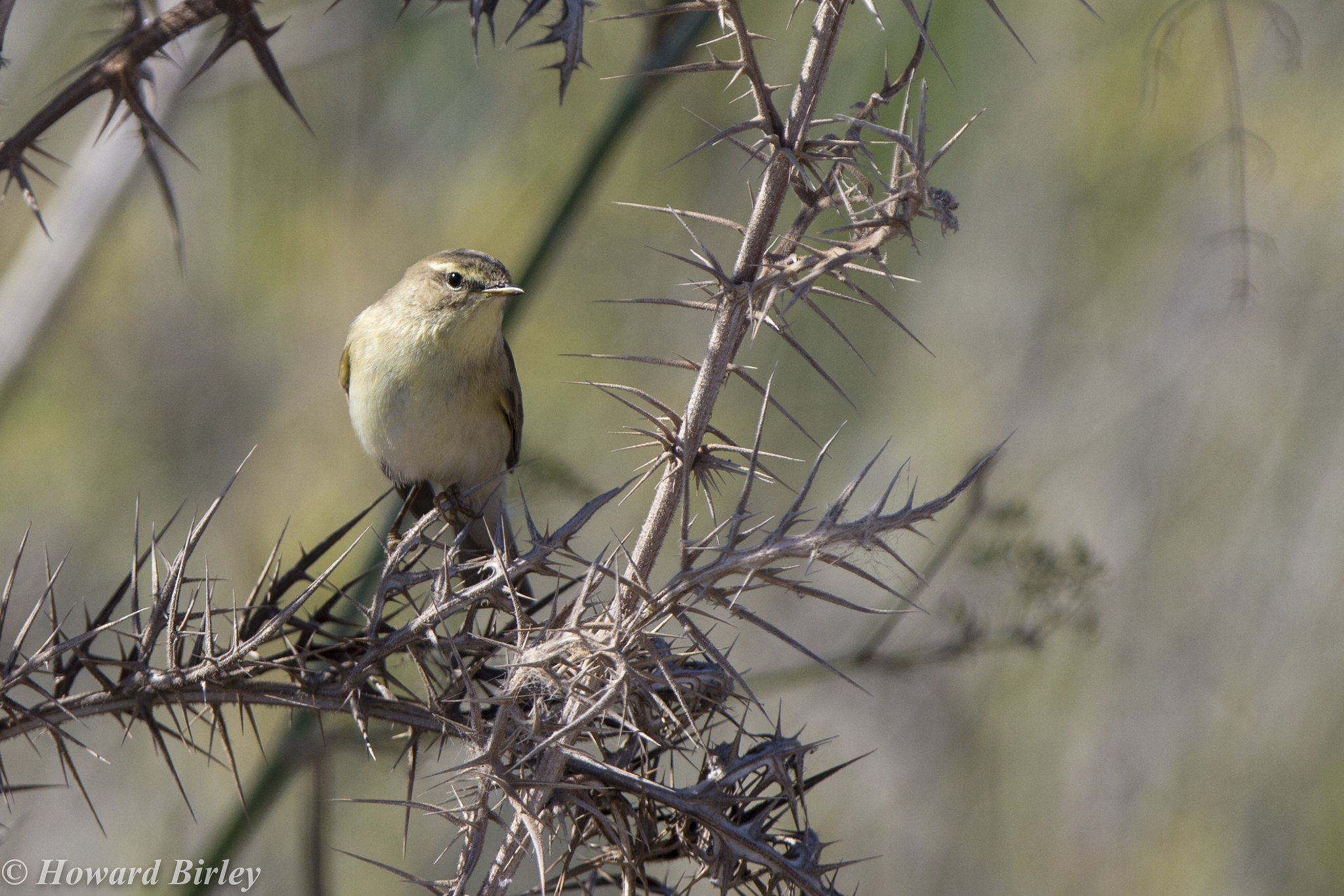
The Warblers are a large group (almost 400 species) of small, often drably coloured birds, which can be difficult to tell apart at first sight.
Most species do, however, quite different songs which are often rich, complex and melodious. They are generally birds of woodland or dense scrub and most have fine pointed bills for gleaning insects off foliage. Within this large grouping are a number of distinctive subgroups, usually consisting of species within a single genus. The Acrocephalus, or Reed Warblers are birds of reed or swamp. The Locustella, or Grasshopper Warblers similarly live in dense vegetation and have a simple and seemingly endless, whirring, song which gives them their name. The largely African Cisticola group inhabitats the drier the drier grassland habitats. The Sylvia Warblers are birds of scrub and are perhaps the most visible of the warbler groups, at least in Britain. They are also amongst the more colourful Warblers, and are unusual in that the sexes differ in plumage (the female being duller). The Hippolais Warblers have a similar body structure, but their green colouration and foraging habits more recalls the Leaf Warblers, but they are generally scarce visitors to Britain. The Phylloscopus, or Leaf Warblers are amongst the smallest warblers and are to be seen flitting amongst the foliage, gleaning small insects with their delicate, pointed bills. The kinglets, or ‘crests’, (Regulus) are a small group of tiny birds, similar in habits to the leaf warblers and are sometimes placed in their own family, the Regulidae. Most Warblers in Europe and Asia are migratory, leaving their northern breeding grounds for the winter months to find insects in the warmer south. Most migration occurs at night, and birds will put on substantial fat reserves before undertaking these long journeys; it is not unknown for birds to double their body weight with fat in preparation. However, as climates change, this pattern of migration is evolving with birds not moving so far south, and a few individuals even overwintering on their breeding grounds. In Britain, increased garden feeding is also encouraging Blackcaps to spend the winter here. Populations of the few species are resident in northern areas, such as the Dartford and Cetti’s Warblers and Goldcrests are prone to large crashes in severe winters.